Buyer’s checklist
Choosing toys that actually train logic, memory and focus
Walk into any toy aisle in Dubai Mall or scroll a UAE marketplace at midnight and you will see the same promise on almost every box: educational, developmental, brain-boosting. Most of those labels mean very little. The toys that genuinely help a child think, remember and concentrate share a small set of traits, and once you know what to look for, choosing gets easier and cheaper.
Why it matters
What “developmental” really means
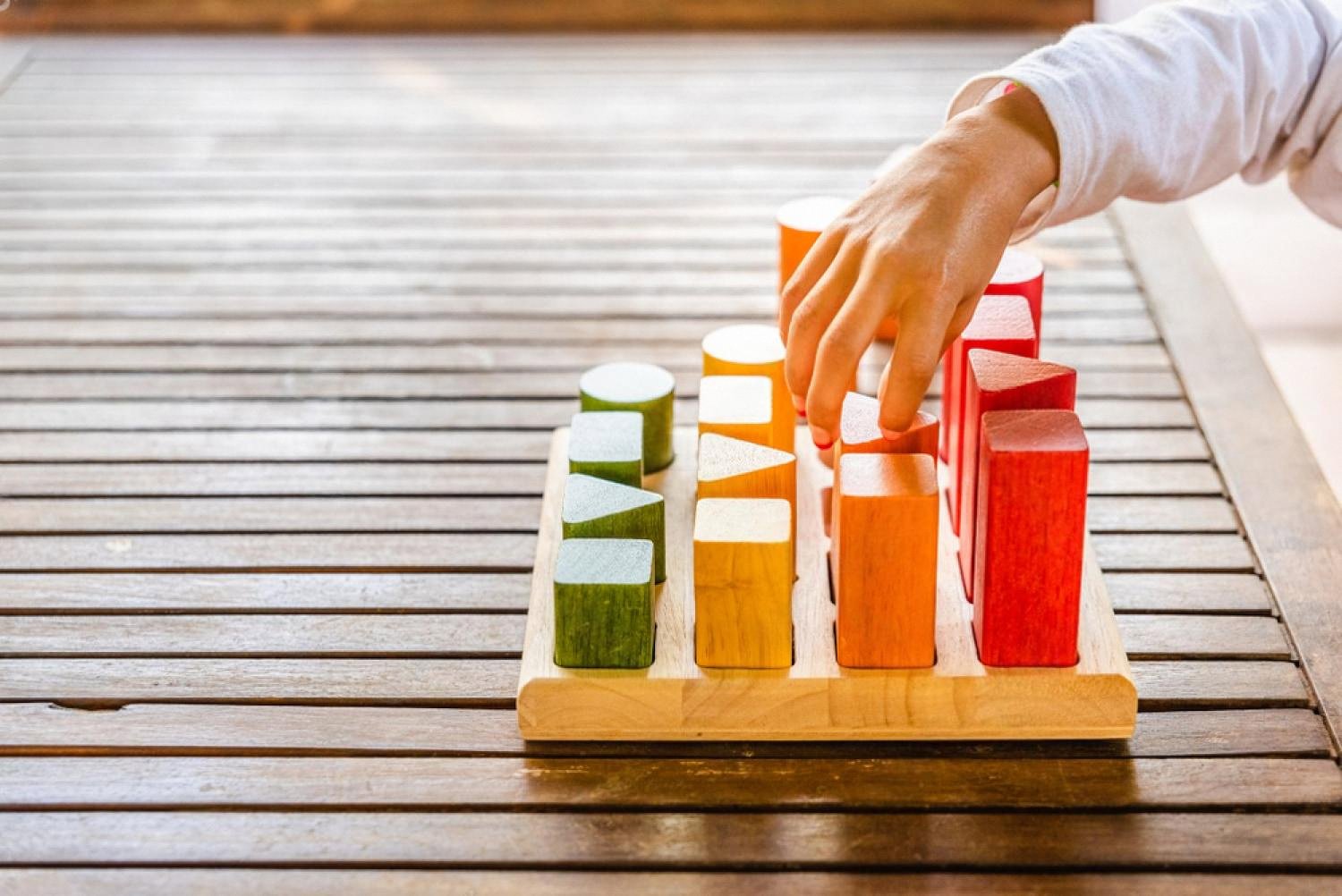
A toy trains logic when the child has to notice a rule and apply it. It trains memory when success depends on holding something in mind, a colour, a position, a matching pair. It trains concentration when the reward comes only after a few minutes of focused effort, not after a single tap.
Screens rarely tick all three boxes at once. Simple physical toys, pyramids, sorters, puzzles, pairing cards and building blocks, do this quietly and repeatedly. According to WHO guidance on early childhood interactive, non-screen play in the first five years is one of the strongest predictors of later attention and learning skills.
The 7-point checklist before you pay
- One clear rule per toy. A good sorter asks the child to match by shape, size or colour. If a toy tries to teach ten skills at once, it usually teaches none of them well.
- Open-ended play, not one-shot solutions. A puzzle you solve once and abandon is a poor investment. Blocks, magnetic tiles and pattern cards can be replayed for years.
- Age fit, not just the number on the box. A toy that is slightly too easy bores the child; slightly too hard kills concentration. Pick the level where the child succeeds after some effort, not instantly.
- Physical, tactile pieces. Wooden or sturdy plastic parts a child can grip, sort and stack outperform flashing screens for logic and memory work.
- Safe materials, GCC-compliant. Look for EN71, ASTM F963 or ESMA (Emirates Conformity) marks. Avoid loose small parts for under-3s and check paint safety on cheap imports.
- Quiet failure. If a wrong move triggers a loud siren or a shaming sound, most children stop trying. The best toys let the child notice the mistake and adjust.
- Storage and portability. Apartments in Dubai and Sharjah are not big. A toy that lives in a bag for the school run gets used ten times more than one that lives in a bulky bin.
Deep dive 1
Age fit is the trickiest item on the list
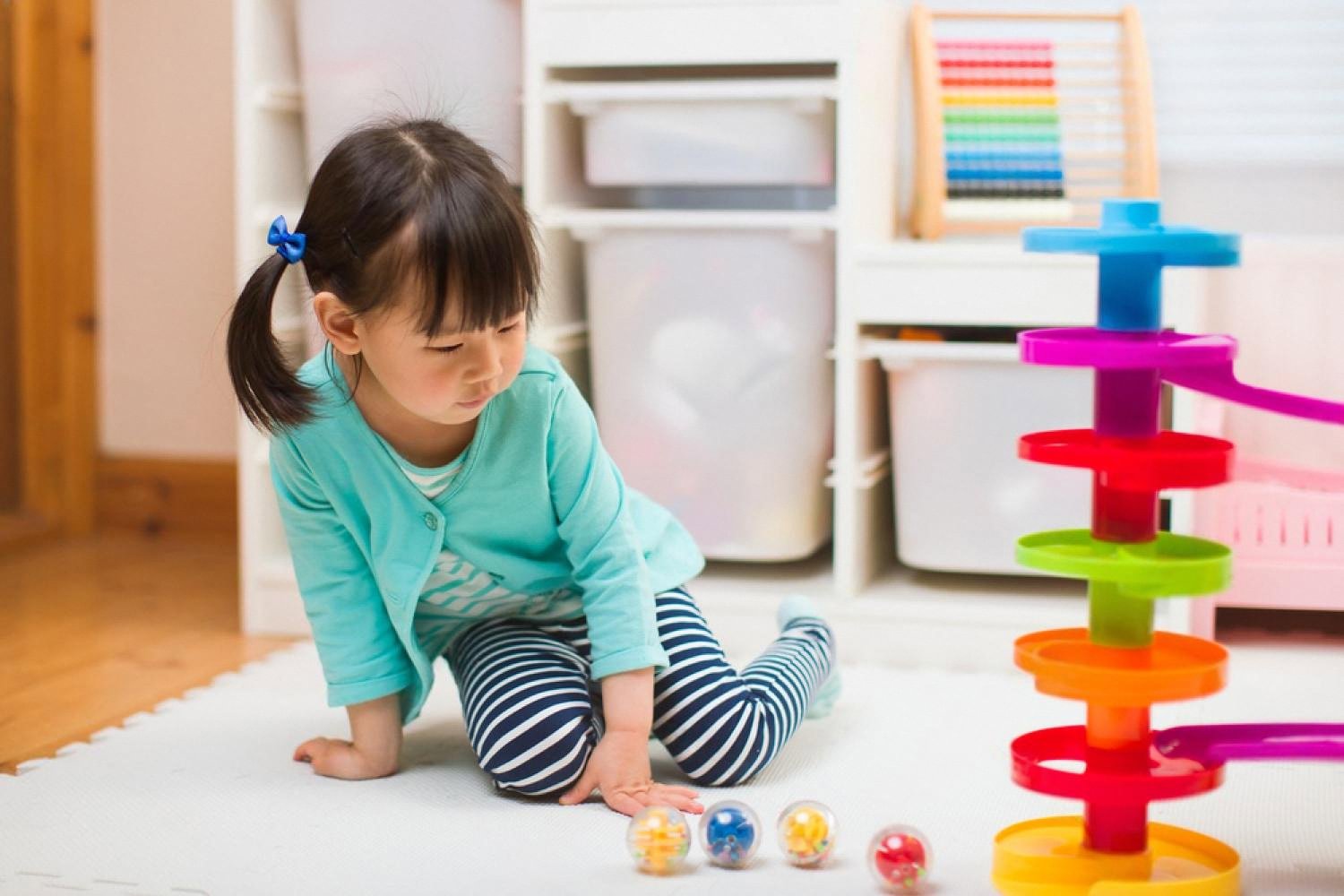
The number printed on the box is a safety guide, not a development guide. A 2-year-old who already stacks a five-ring pyramid needs a ten-ring one, or a size-and-colour sorter, not another basic stacker. A 4-year-old who cannot yet sit through a 24-piece puzzle should not be pushed to a 100-piece box just because the age label says 4+.
A simple rule works well. Watch the child play for one session. If they finish in under two minutes and lose interest, the toy is too easy. If they refuse to start after two tries, it is too hard. The sweet spot is five to fifteen minutes of frowning, retrying and finally grinning.
Deep dive 2
Pairing cards, the most underrated brain toy
Pairing card sets, profession and tool, animal and habitat, object and shadow, get overlooked next to flashy electronic toys. They are, quietly, one of the best memory and logic trainers you can buy. A child matching a firefighter to a fire truck, or a doctor to a stethoscope, has to hold a category in mind, scan options, and justify a choice out loud. That is exactly the cognitive loop schools try to build in Year 1.
They also scale beautifully. The same deck that a 3-year-old uses for simple matching can, at 5, become a memory game where cards go face down. At 6, the same deck can be used to invent stories: pick a profession card, pick a random object, explain how they connect. Reputable UAE retailers stock Arabic-English bilingual decks, which doubles the value in bilingual households. If you run a nursery or a toy shop and want to source these in bulk, working with a specialised educational toys distributor usually beats piecing orders together from generic wholesalers.
Toy types by skill and price range in the UAE
| Toy type | Best age | Main skill | Typical UAE price |
|---|---|---|---|
| Stacking pyramid (rings, cups) | 10 months to 2 years | Size logic, hand-eye | AED 30 to 90 |
| Shape and colour sorter | 18 months to 3 years | Category logic, memory | AED 45 to 150 |
| Wooden building blocks / LEGO Duplo | 2 to 5 years | Spatial logic, planning | AED 80 to 400 |
| Puzzles (12 to 100 pieces) | 3 to 7 years | Concentration, spatial reasoning | AED 30 to 200 |
| Pairing / memory cards | 3 to 7 years | Memory, category logic | AED 25 to 120 |
| Magnetic tiles / pattern boards | 4 to 8 years | Geometry, logic, focus | AED 120 to 500 |
| Classic LEGO sets | 5+ years | Sequencing, sustained focus | AED 100 to 800 |
Prices are typical retail ranges seen at UAE toy retailers and marketplaces. Group-buy platforms and end-of-season sales at Dubai Festival City or Yas Mall can cut these figures by 20 to 40 percent.
Building a small but strong toy shelf
- Start with one sorter and one stacker. These cover the earliest logic work for children under three.
- Add a puzzle appropriate to the current attention span. Move up one difficulty level every few months, not every week.
- Introduce building blocks that connect. Duplo first, then classic LEGO around age four or five.
- Bring in a pairing card deck. Cheap, portable, and it grows with the child.
- Rotate, do not accumulate. Keep four or five toys within reach and store the rest. Rotating every two weeks makes old toys feel new.
A shelf built this way, one sorter, one puzzle, one block set, one card deck and one open-ended construction toy, costs under AED 600 in total and covers logic, memory and concentration from toddler years through primary school.
Frequently asked questions
At what age should I start buying developmental toys for my child?
From around six months, when a baby can sit and grasp, simple stacking rings and soft sensory blocks are already useful. Real logic work, sorting by shape or colour, starts to click between 15 and 24 months. There is no benefit in rushing complex toys before the child is ready; a toy that frustrates a one-year-old just gets pushed away.
Are wooden toys really better than plastic ones?
Not automatically. Wooden toys tend to be quieter, more durable and free of loud electronic feedback, which helps concentration. But a well-made plastic sorter or LEGO set is just as good developmentally. What matters more is the rule the toy asks the child to follow and the quality of the pieces, not the material itself.
How many toys should a child actually have?
Fewer than most UAE households keep. Research on toddler attention suggests children play longer and more creatively with four to six accessible toys than with twenty. A practical setup is one sorter, one puzzle, one construction set, one card or memory game and one open-ended toy (blocks or magnetic tiles) within reach, with the rest rotated in and out of storage.
Do educational apps replace physical logic toys?
They complement, they do not replace. Apps can drill memory and pattern recognition, but they rarely train the fine motor control, spatial reasoning and sustained physical focus that a puzzle or a sorter builds. For children under six, physical toys should carry most of the developmental load, with screen time kept short and purposeful.
What safety marks should I look for on toys sold in the UAE?
Look for the ECAS or ESMA conformity mark on the packaging, which confirms the product meets UAE safety standards. European EN71 and American ASTM F963 marks are also reliable. Avoid unbranded toys with strong chemical smells, loose small parts for children under three, or paint that flakes easily.
How do I keep an easily distracted child engaged with a puzzle or sorter?
Sit with them for the first few minutes, then step back. Choose a difficulty just slightly above what they can do alone, so success feels earned. Keep the play area quiet, no TV in the background, and put competing toys out of sight. Short, focused sessions of ten to fifteen minutes beat forcing an hour at the table.
Are pairing cards useful for bilingual Arabic-English households?
Very. Bilingual pairing decks, or two matching decks in different languages, let a child name the same object in both languages, which reinforces vocabulary alongside the logic exercise. Many UAE-based educational brands now produce Arabic-English sets specifically for nurseries and homes here.

Allen Poole
View More PostsBasketball fan, nature enthusiast, music blogger. Working at the junction of aesthetics and purpose to craft experiences both online and in real life. I'm a designer and this is my work.